
Why In-House Fleet Hydraulics Capability Matters to Fleet Operations
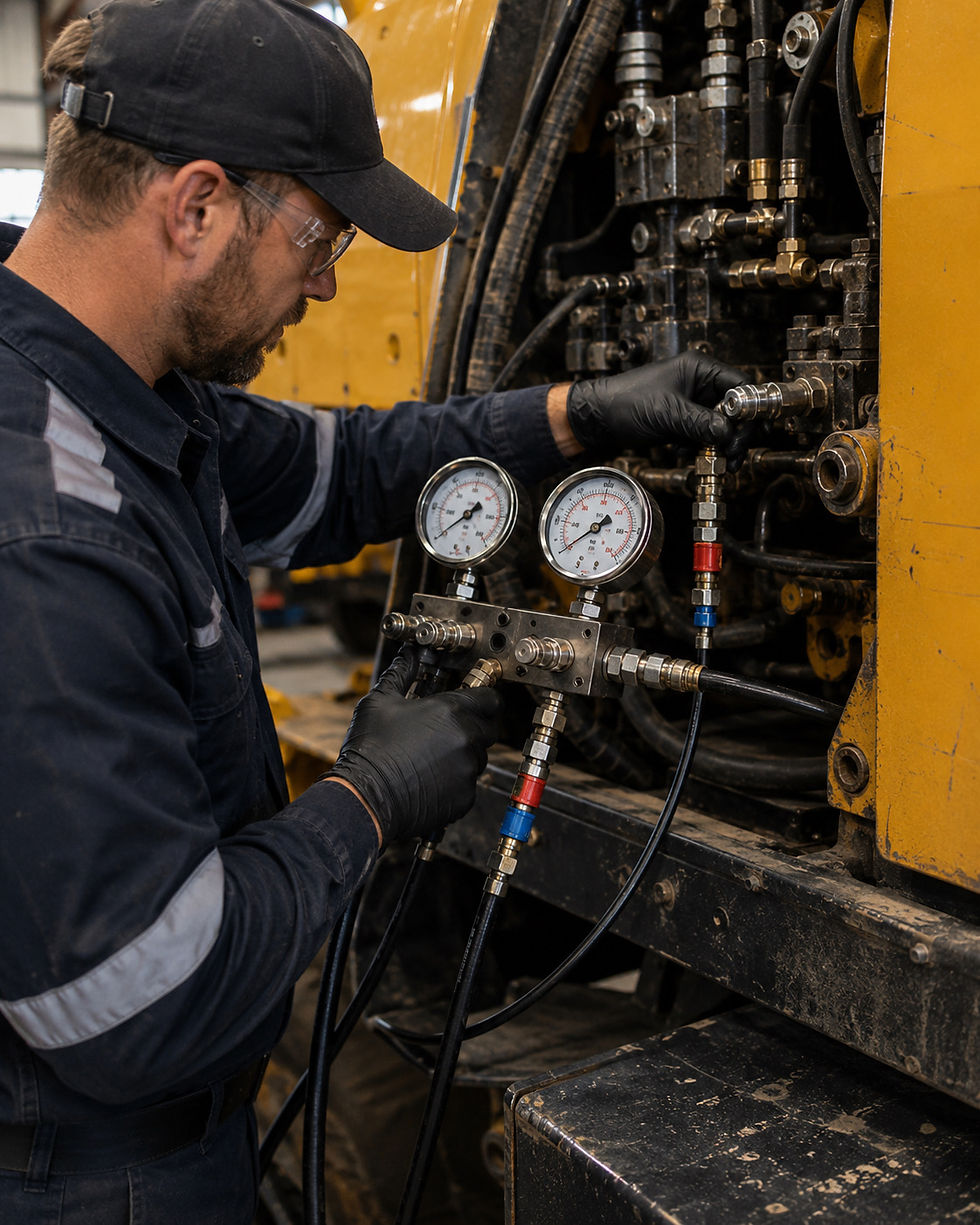
When a hydraulic system fails on a fleet vehicle, the problem is rarely limited to a leaking hose or a bad cylinder.
The vehicle may be unable to perform the work it was purchased to do. A dump body may not lift. A refuse vehicle may not operate its collection equipment. A lift, actuator, steering-assist system, or other hydraulically operated component may be taken out of service. And if the technicians maintaining that equipment cannot confidently diagnose the problem, the next call may be to an outside repair provider.
At that point, a technical problem has become an operational problem.
That is why hydraulics training should be viewed as more than another line item in a technician-development program. For fleets that operate hydraulically equipped vehicles and equipment, building in-house hydraulic diagnostic capability can be an uptime, safety, and maintenance-management strategy.
The available research does not give us a credible universal number such as “hydraulics training reduces downtime by 30%.” However, what the evidence does show is that technician troubleshooting capability affects maintenance performance, that inadequate training can lead to longer diagnosis times and unnecessary parts replacement, and that hydraulic systems introduce serious safety hazards that require employees to understand stored energy and proper service procedures. Seen through this lens, the operational benefits of building those skills in-house become evident.
Hydraulics Is a Diagnostic Discipline
Hydraulic systems are sometimes treated as comparatively straightforward: pumps create pressure, cylinders move, hoses carry fluid, and valves control direction.
A technician troubleshooting an actual hydraulic fault knows it is rarely that simple.
Pressure and flow are different variables. A system can develop pressure and still fail to perform correctly. Temperature, contamination, component wear, restrictions, load, fluid condition, valve operation, pump performance, and control inputs can all affect system behavior.
WTA's Hydraulics for Heavy-Duty Vehicles course addresses those relationships directly. Technicians learn hydraulic circuit operation, pressure and flow regulation, and how system performance changes with wear, contamination, temperature, and load. Hands-on diagnostic work includes pumps, valves, actuators, cylinders, reservoirs, filters, and related controls.
Having a deeper understanding of hydraulics systems changes the repair process. Instead of asking, “Which part should we replace?”, a trained technician can work toward the more important question: “What is actually causing the system to behave this way?”
1. Better Troubleshooting Can Mean Less Unplanned Downtime
One of the strongest arguments for technician training comes from broader fleet-maintenance research rather than hydraulic-specific studies.
A Federal Transit Administration peer-exchange report concluded that effective training is essential to keeping increasingly technical transit vehicles operating safely and efficiently. The report specifically warns that inadequate training can waste time and money and can contribute to service disruptions because technicians take longer to identify and repair problems. It also notes that trial-and-error diagnosis can result in working parts being replaced unnecessarily.
An older Transportation Research Board case study provides an even more useful example. The Ann Arbor Transportation Authority found that employee troubleshooting skill level was the primary cause of its high road-call rate. The agency brought in outside training for its mechanics and simultaneously implemented a team-based maintenance model. In the study, the agency reported that road calls had fallen 78% since 1985.
While that 78% figure cannot responsibly be attributed to training alone, it does demonstrate something important. Maintenance skill, troubleshooting capability, maintenance organization, and vehicle reliability are connected.
For hydraulics, the reasonable inference is that technicians who understand how to test pressure, flow, restriction, valve operation, pump output, and actuator performance are better positioned to identify root causes efficiently than technicians relying primarily on component substitution. That should matter to any fleet measuring mean time to repair, repeat repairs, road calls, equipment availability, or unscheduled maintenance.
2. In-House Capability Gives Fleets More Control Over Downtime
There is another advantage that is operationally significant: the ability to decide which hydraulic repairs actually need to leave your facility. Outsourcing specialized work will always have a role in fleet maintenance. Training technicians does not mean every fleet should purchase every piece of hydraulic test equipment, rebuild every component, or eliminate specialist vendors.
The objective is control. When a shop cannot confidently diagnose a hydraulic problem, an outside provider may need to become involved earlier in the process. That can introduce additional steps: scheduling the vendor, transporting or staging the equipment, waiting for diagnosis, authorizing work, obtaining parts, coordinating completion, and returning the vehicle to service. If a fleet technician can safely diagnose and complete an appropriate repair in-house, the fleet removes the vendor scheduling and handoff steps from that particular repair.
Even when outside assistance is ultimately required, diagnostic knowledge still has value. A technician who can provide pressure readings, symptoms, circuit information, test results, and the operating conditions under which the failure occurs gives the specialist a much better starting point than, “The hydraulics aren't working.”
That can make internal capability valuable even when the repair itself is outsourced.
3. Hydraulic Safety Is a Serious Training Issue
Uptime may attract management attention, but safety is the area where a lack of hydraulic knowledge can have immediate consequences. Hydraulic systems can retain significant stored energy even after a machine or vehicle has been shut down.
OSHA specifically states that hydraulic systems may contain potentially hazardous stored energy and that hazardous pressure must be relieved, disconnected, restrained, or otherwise rendered safe where the agency's hazardous-energy-control requirements apply. OSHA's Lockout/Tagout standard also requires employee training so workers understand hazardous energy and acquire the knowledge and skills necessary to control it safely.
The broader hazardous-energy numbers are substantial. OSHA estimates that compliance with Lockout/Tagout requirements prevents approximately 120 fatalities and 50,000 injuries each year, and that workers injured through hazardous-energy exposure lose an average of 24 workdays while recovering. While those figures cover hazardous energy generally, they illustrate why stored-energy control is treated so seriously.
High-pressure hydraulic leaks present another risk. A hydraulic leak does not have to look dramatic to be dangerous. In a documented 2019 OSHA case, a pinhole in a hydraulic hose released fluid under sufficient pressure to inject hydraulic fluid into an employee's back, resulting in hospitalization. In another 2019 case, a worker looking for a pinhole leak had hydraulic fluid injected into his thumb; the injury later became infected and required hospitalization.
Technicians need to understand stored pressure, safe depressurization, proper leak-detection practices, component support, accumulator hazards, and the dangers associated with placing hands or other body parts near a suspected high-pressure leak.
For fleet management, that makes hydraulics training part of technician safety, not simply technical proficiency.
4. Better Training Should Lead to Better Maintenance Documentation
Proper training should also change what gets written on the work order. A more useful maintenance record can document the complaint, operating condition, pressure or flow test results, identified fault, corrective action, fluid condition, component replaced, post-repair verification, and any recommendation for follow-up inspection.
Why does that matter? Because maintenance data only has value when technicians create useful data in the first place.
The Transportation Research Board's published research on transit maintenance identified work orders, repeat failures, parts consumption, diagnostic time, road calls, and unscheduled maintenance as valuable tools for evaluating maintenance performance and identifying training needs. Agencies with better monitoring systems could identify whether technicians were troubleshooting properly or simply replacing parts until the problem disappeared.
For public transit fleets, documentation has also been part of formal maintenance oversight. FTA's FY2020 maintenance-review guidance examined preventive-maintenance records, maintenance history, inspection dates, checklists, and whether manufacturer updates had been incorporated into maintenance procedures.
The larger lesson, though, is an operational one. A technician who understands what happened inside the hydraulic system is better positioned to document information that can help the fleet identify repeat failures, component trends, contamination problems, preventive-maintenance opportunities, and recurring vehicle-specific issues. That turns a work order from a repair receipt into a management tool.
5. Training Can Reduce “Parts Cannon” Diagnosis
Replacing parts until a hydraulic problem disappears can be expensive.
It can also conceal the real fault. A weak pump may not be the underlying problem if fluid starvation damaged it. A cylinder may not be responsible for slow operation if flow is restricted upstream. Replacing a valve may temporarily alter a symptom without addressing contamination that is affecting the circuit.
This is precisely the type of maintenance problem broader transit research has identified. FTA's 2020 peer-exchange report states that inadequately trained technicians may identify problems through trial and error and sometimes replace components that are still functioning. LA Metro Senior Bus Equipment Maintenance Instructor Obed Mejia told the peer exchange that the cost of training is far less than the cost of misdiagnosed problems and unnecessary parts replacement.
While Instructor Mejia's statement is practitioner testimony rather than a controlled empirical ROI study, the evidence supports a narrower conclusion: systematic troubleshooting is intended to identify the actual fault before parts are replaced, and fleet-maintenance research has identified misdiagnosis and unnecessary parts replacement as consequences of inadequate training. For fleet managers, avoiding even some of that unnecessary diagnostic time and parts replacement represents a legitimate economic benefit—even if the industry does not yet have enough data to assign it a universal percentage.
6. Hydraulic Skills Remain Relevant as the Fleet Changes
Hydraulic competency is not tied to a single fuel or propulsion technology. Fleets may be transitioning among diesel, propane, CNG, hybrid, and battery-electric platforms, but hydraulically operated equipment does not simply disappear because the powertrain changes. That makes hydraulics a useful example of why modern technician development cannot be divided neatly into “old technology” and “new technology.”
For mixed fleets in particular, developing technicians who understand systems instead of only specific vehicle models can create a more adaptable maintenance workforce. A technician may need to understand high-voltage safety on one vehicle, CAN communications on another, air brakes on a third—and hydraulic pressure, flow, valves, actuators, and controls across all of them.
WTA's course is intentionally designed around hydraulic systems found across diesel, propane, CNG, hybrid, and electric heavy-duty platforms. WTA also offers training courses on modern vehicle technologies and diagnostics.
Training In-House Does Not Mean Doing Everything In-House
This distinction is important. A strong fleet maintenance operation knows both what it can do internally and where its limits are.
Hydraulics training should help technicians:
Understand system operation and hydraulic schematics.
Test rather than guess.
Identify the actual source of a hydraulic complaint.
Recognize dangerous stored-energy conditions.
Perform appropriate preventive maintenance and repairs.
Document findings clearly.
Determine when specialized equipment, component rebuilding, engineering support, or an outside repair provider is appropriate.
That last skill is just as valuable as the others. The goal is not eliminating vendors; it is eliminating unnecessary dependence on them.
The Business Case Is Capability
It is tempting to justify training with a simple return-on-investment number.
Unfortunately, fleets operate under too many different conditions for such a number to be credible. The better business case is capability.
A fleet with trained hydraulic technicians is better positioned to diagnose problems systematically, identify appropriate repairs, control more work internally, provide outside vendors with better diagnostic information when they are needed, document failures more effectively, and recognize the safety hazards created by pressurized and stored hydraulic energy.
The evidence available from the broader fleet-maintenance industry supports the relationship between technician skill and maintenance performance. OSHA's guidance establishes the seriousness of hydraulic stored-energy hazards. The remaining operational conclusion is a reasonable one:
When hydraulics are essential to the work your vehicles perform, hydraulic knowledge should be essential to the technicians responsible for keeping those vehicles working.
How much hydraulic work could your fleet handle internally if your technicians had stronger diagnostic skills?
WTA's Hydraulics for Heavy-Duty Vehicles Level 1 course provides 16 hours of hands-on and classroom instruction covering hydraulic principles, pressure and flow, component operation, diagnostic testing, preventive maintenance, safe work practices, and practical repair techniques. The course is offered at WTA's California training facility, or our instructors can deliver training at your fleet or repair facility
Training can also be customized around the OEM vehicles and equipment your fleet operates.
Build the hydraulic capability your maintenance team needs to diagnose more problems in-house, work more safely, and keep critical equipment in service.
Sources & Further Reading
Workforce Training Associates — Hydraulics for Heavy-Duty Vehicles Course curriculum, hands-on training, system coverage, and OEM customization.
Federal Transit Administration — Bus Maintenance and Bus Testing Program Peer-to-Peer Exchange, Summary Report Discusses the operational effects of inadequate technician training, diagnostic inefficiency, unnecessary parts replacement, and service disruptions.
Transportation Research Board — TCRP Synthesis 22: Monitoring Bus Maintenance Performance Includes the Ann Arbor Transportation Authority case study connecting technician troubleshooting skill, mechanic training, team-based maintenance, and reduced road calls.
OSHA — Control of Hazardous Energy (Lockout/Tagout), 29 CFR 1910.147 Requirements concerning hazardous-energy-control procedures and employee training.
OSHA — Interpretation: Lockout/Tagout of Hydraulic Systems Clarifies that hydraulic systems can contain hazardous stored energy requiring pressure to be relieved, disconnected, restrained, or otherwise made safe.
OSHA — Control of Hazardous Energy Overview Background on the safety consequences of uncontrolled hazardous energy.
OSHA — Hydraulic Fluid Injection Accident Report, July 8, 2019 Documents hospitalization following high-pressure hydraulic fluid injection from a pinhole hose failure.
OSHA — Hydraulic Fluid Injection Accident Report, May 2, 2019 Documents a pinhole hydraulic leak that injected fluid into a worker's thumb and resulted in hospitalization.
Federal Transit Administration — Maintenance Enhanced Review Module Guidance concerning preventive-maintenance records, maintenance histories, checklists, inspection intervals, and documentation.


Comments