


Fuel Price Volatility Is Reshaping Fleet Economics. Why More Fleets Are Re-Evaluating Their Vehicle Mix

Diesel prices do not need to rise in a straight line to change fleet decisions. Volatility alone can do it. U.S. on-highway diesel prices surged above $5.80 per gallon in June 2022, settled into a lower but still elevated range through 2023–2025, and then moved back up to $4.92 per gallon in March 2026. For fleet managers, that kind of instability matters because it complicates budgeting, fuel surcharges, route economics, and long-term vehicle planning.
What the evidence supports is not a simplistic claim that “diesel got expensive, so fleets switched.” The data point to a more practical conclusion: fuel-price volatility is pushing fleets to take a harder look at total cost of ownership, and that makes alternatives such as EVs, CNG, hybrids, renewable fuels, and other advanced platforms harder to ignore. California’s 2024 Vehicle Survey found that for commercial buyers, vehicle price was the biggest factor in vehicle choice, followed by maintenance and fuel costs. That does not tell us which technology every fleet will choose, but it does confirm that operating costs are central to the decision.
The economics of some alternatives have also been improving relative to diesel. DOE’s Clean Cities and Communities Alternative Fuel Price Reports show that CNG was cheaper than diesel nationally and in most regions across multiple recent reporting periods. In April 2024, national average CNG prices were $0.79 per diesel-gallon-equivalent lower than diesel, and on the West Coast the gap was $1.42/DGE. In October 2025, CNG was still $0.39/DGE lower than diesel nationally. These reports are only snapshots, not lifetime TCO studies, but they do show why fleets continue to keep CNG and RNG in the conversation, especially in regions where diesel spreads remain meaningful.
For zero-emission trucks, the best recent evidence comes from NREL’s total-cost-of-driving modeling. NREL found that fuel costs are the largest component of total cost of driving in heavy-duty long-haul segments, and that fuel-price assumptions materially change adoption outcomes. In its sensitivity analysis, lower diesel prices had one of the largest negative impacts on ZEV adoption, while higher diesel prices averaging $6 per gallon rather than $4 produced the greatest emissions reductions relative to central assumptions, reflecting faster zero-emission uptake. That is model-based analysis, not a real-world proof of causation, but it is strong evidence that diesel prices can materially influence the economics of advanced powertrains.
Industry research aligns with that conclusion. NACFE says fleets are navigating a “messy middle” in which there is no one right solution for every duty cycle, and it specifically identifies energy and fuel pricing as a major decision variable. NACFE also notes that recent fuel-price instability can accelerate battery-electric and hydrogen solutions by helping them reach TCO parity with diesel sooner. For fleet leaders, that is the practical lesson: rising fuel uncertainty does not automatically dictate the answer, but it does make side-by-side technology evaluation more urgent.
In public-sector fleets, the picture is similar but more layered. California’s City of Long Beach found that it had already reduced emissions by transitioning portions of its medium- and heavy-duty fleet to renewable CNG and LNG, and its blueprint projects $600,000 in annual maintenance cost savings for its non-public-safety fleet upon full conversion to zero-emission vehicles, along with additional operating-cost savings. That is not a diesel-price study, and it should not be read as one. What it does show is that public fleets are increasingly evaluating fuel choice, maintenance cost, infrastructure, and emissions together rather than treating them as separate decisions.
School transportation tells a similar story. Electric school bus adoption has grown quickly across the United States, but the evidence suggests that funding and policy support have been the biggest near-term drivers of deployment. WRI reports that the EPA’s Clean School Bus Program has been the single biggest driver of electric school bus deployment, funding approximately two-thirds of buses. That means fuel savings help strengthen the case, but they are not the only reason districts are moving. The more defensible takeaway is that higher fuel uncertainty is making alternatives more attractive at the same time grants and policy support are making those alternatives more attainable.
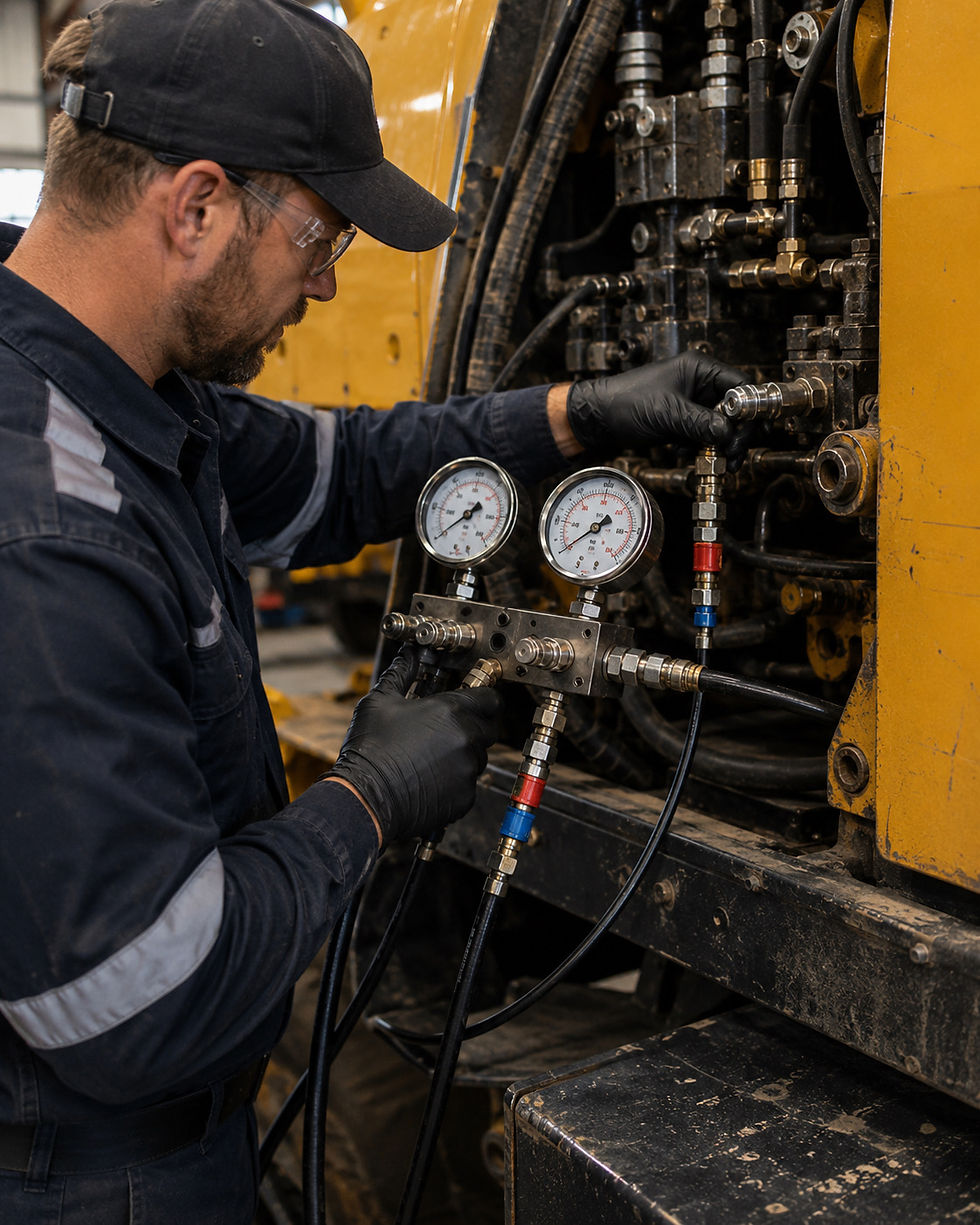
The workforce implication is where this matters for fleet operations. Once a fleet begins adding EVs, charging systems, CNG vehicles, hybrids, or other newer technologies, the economics are only part of the equation. The fleet also has to support those vehicles in the field. Long Beach’s zero-emission blueprint says facility changes may be required to safely service BEVs and FCEVs and that fleets will need specialized workforce training and additional support for operations and maintenance. FTA guidance for battery-electric buses makes the same point, noting that BEB deployment should include procurement language for training and that consistent training can increase safety, improve efficiency, and help minimize service disruptions.
For fleet managers and transportation directors, the message is straightforward. Rising fuel costs are not the sole reason fleets are considering EVs, CNG, hybrids, and other alternatives. But persistent diesel volatility is making the economics of those technologies harder to dismiss. The fleets that will be best positioned to respond are the ones that do more than watch fuel prices. They evaluate duty cycle, infrastructure, incentives, maintenance implications, and technician readiness together. That is how a fuel-cost problem becomes a strategic planning advantage instead of just another budget shock.
If your fleet is evaluating EVs, charging infrastructure, CNG systems, hybrids, or other advanced vehicle technologies, WTA can help your technicians build the skills needed to support those systems safely and effectively. Explore WTA training programs or contact us to discuss training at your facility.
Source Articles:
U.S. Energy Information Administration — Weekly U.S. No. 2 Diesel Retail Prices
California Energy Commission — 2024 California Vehicle Survey, Full Report, Volume One
U.S. Department of Energy / AFDC — Clean Cities and Communities Alternative Fuel Price Report, April 2024
National Renewable Energy Laboratory — Assessing Total Cost of Driving Competitiveness of Zero-Emission Trucks
NACFE — Messy Middle: A Time for Action
California Energy Commission — City of Long Beach Blueprint for Medium- and Heavy-Duty Zero-Emission Vehicle Infrastructure
World Resources Institute — Driving Forward on a Clean Ride for Kids
Federal Transit Administration — Guidebook for Deploying Battery Electric Buses


Comments